Gallery Walls Are Back. But They Never Really Went Away.
Gallery walls have definitely had their moment over the years, but lately I've noticed they're making a comeback. I think that's because our homes are becoming more personal again. Instead of decorating to match a trend, people are filling their spaces with things that tell a story about who they are.
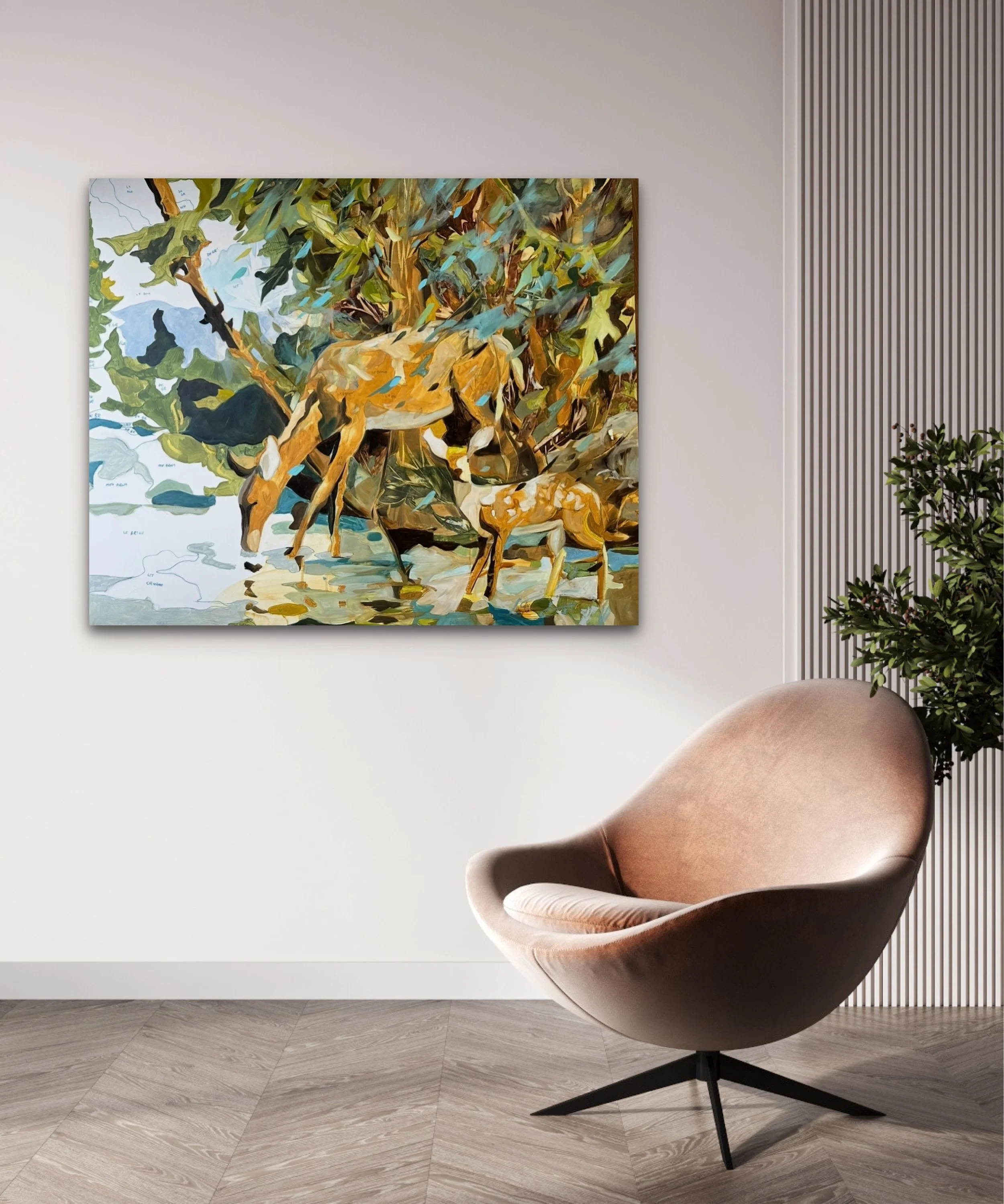
The good news is that a gallery wall doesn't have to be perfectly planned. In fact, I think the best ones rarely are.
You don't need matching frames or identical artwork sizes. You don't have to buy everything at once. A gallery wall can grow over time, just like any meaningful collection. You might begin with one piece you love, add another a few months later, and continue building as you discover artists, objects, and memories that speak to you.
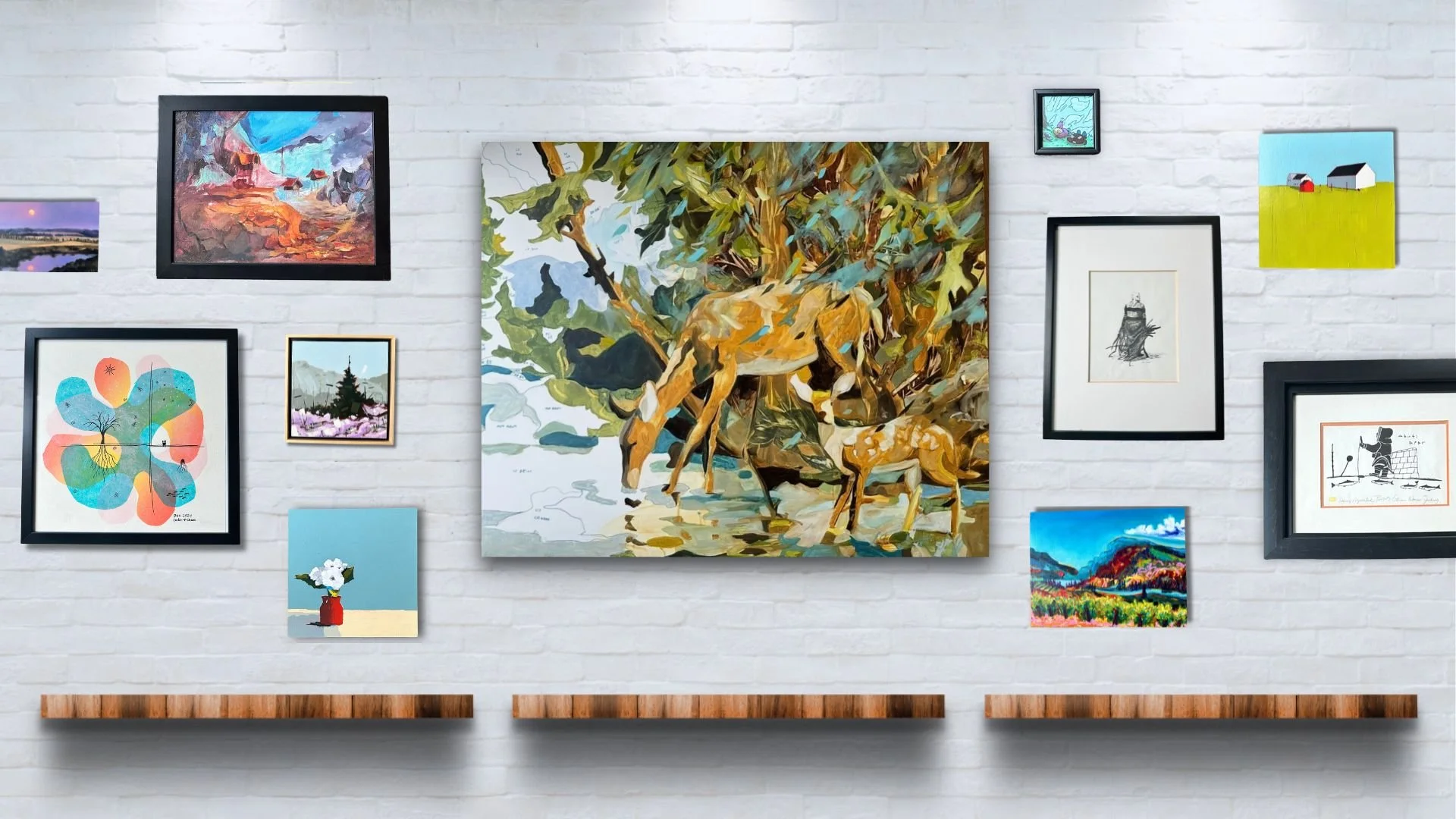
Here’s some of the pieces I have collected with one of my pieces in the center. Creating a gallery wall helps you take a beloved piece that may be too small for the space and give it more visual presence.
The thread that ties everything together doesn't have to be obvious. It might be a recurring colour palette, similar subject matter, or simply the fact that every piece makes you happy when you look at it. Trust that instinct. If you genuinely love a piece of art today, chances are you'll continue loving it years from now.
One of the things I love most about gallery walls is that they allow you to collect work from multiple artists. Rather than feeling like you need one large statement piece, several smaller works can come together to create just as much visual impact while supporting a wider range of artists whose work you admire.
When I look around my own home, I realize that's exactly what I've done. My walls naturally become my gallery, but I also have collections displayed on furniture where I rotate smaller works depending on the season or simply because I feel like making a change. Some pieces are framed, some aren't. I have paintings on panel, stretched canvas, works on paper, and even wooden box pieces that I enjoy displaying.
And yes, you'll usually find one of my own paintings mixed in there too.
Not everything in a gallery wall has to be two-dimensional, either. Some of my favourite groupings include meaningful objects alongside artwork. We have a dulcimer that my brother in law made, a beautiful piece of stained glass, and other three-dimensional objects that add texture and personality. Those pieces become part of the story just as much as the paintings do.
One thing I've learned is that I'm not aiming for symmetry. I'm aiming for balance.
Balance is what makes a gallery wall feel comfortable. You can mix large and small works, horizontal and vertical pieces, framed and unframed art. Sometimes a tiny painting becomes the focal point simply because of where it's placed. The differences between the pieces are often what make the whole arrangement interesting.
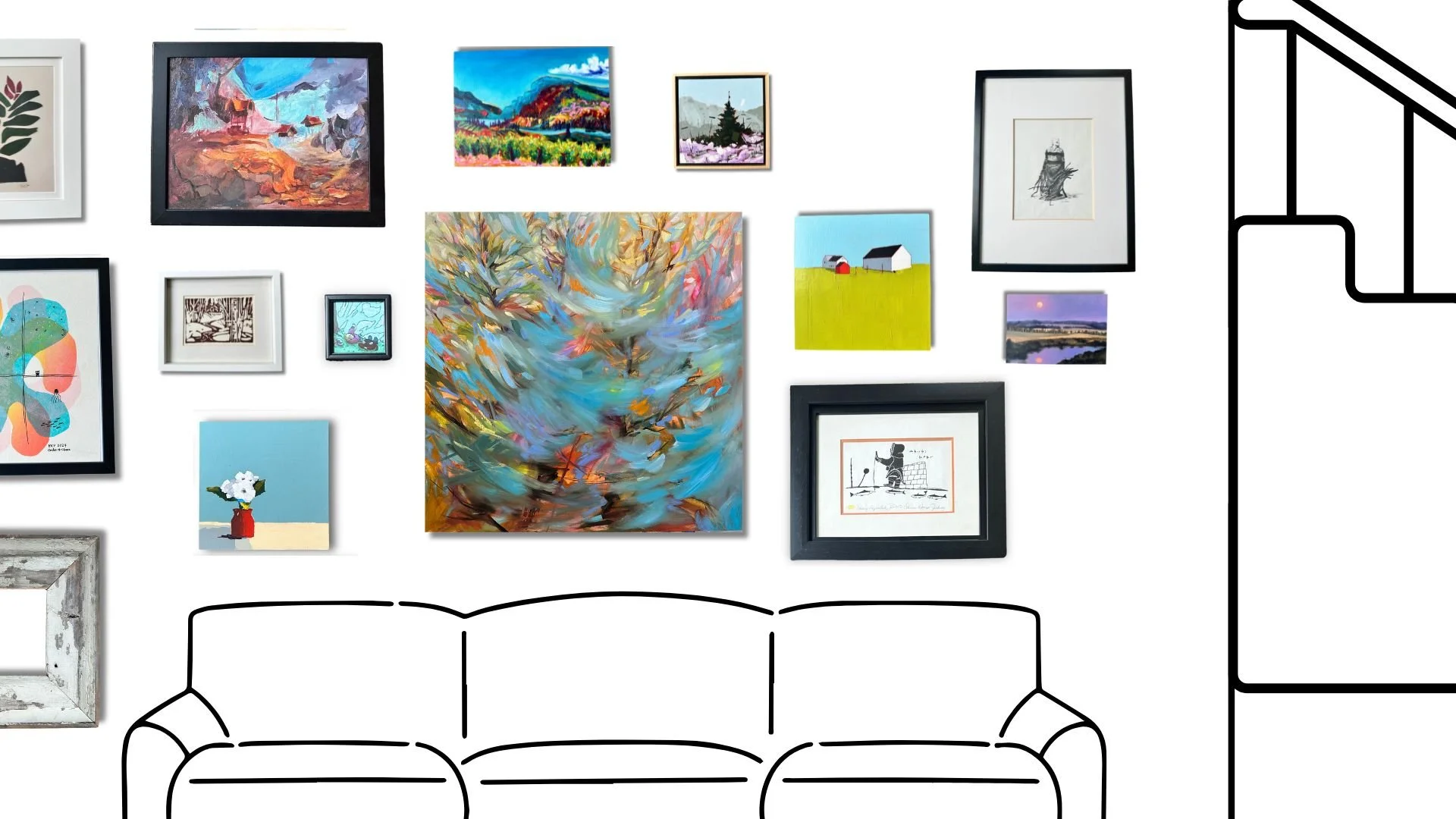
Here’s another arrangement of my collection of actual pieces with a different one of my pieces as an anchor. It pulls in colors and movement from some of pieces and helps tie them together.
One question I'm often asked is whether a gallery wall should stay within the width of a sofa or if it can extend beyond it.
My answer is always: it depends.
If you have lamps, side tables, a fireplace, or a staircase nearby, your gallery wall can naturally flow around those elements. Sometimes it looks wonderful contained above the sofa, and other times it feels better stretching outward and upward. Every room is different.
There really isn't a right or wrong way to do it.
The only challenge comes when you're sharing your home with someone whose decorating style is different from yours. That's where balance matters in another sense too. Maybe one person prefers a more minimal look while the other loves collecting. Most homes end up somewhere in the middle, and that's perfectly fine. You don't have to fill every inch of wall space, but you don't have to limit yourself to a single piece either.
The most successful gallery walls aren't designed to impress anyone else. They're built over time with pieces that mean something to the people who live there.
That's what makes them beautiful.

















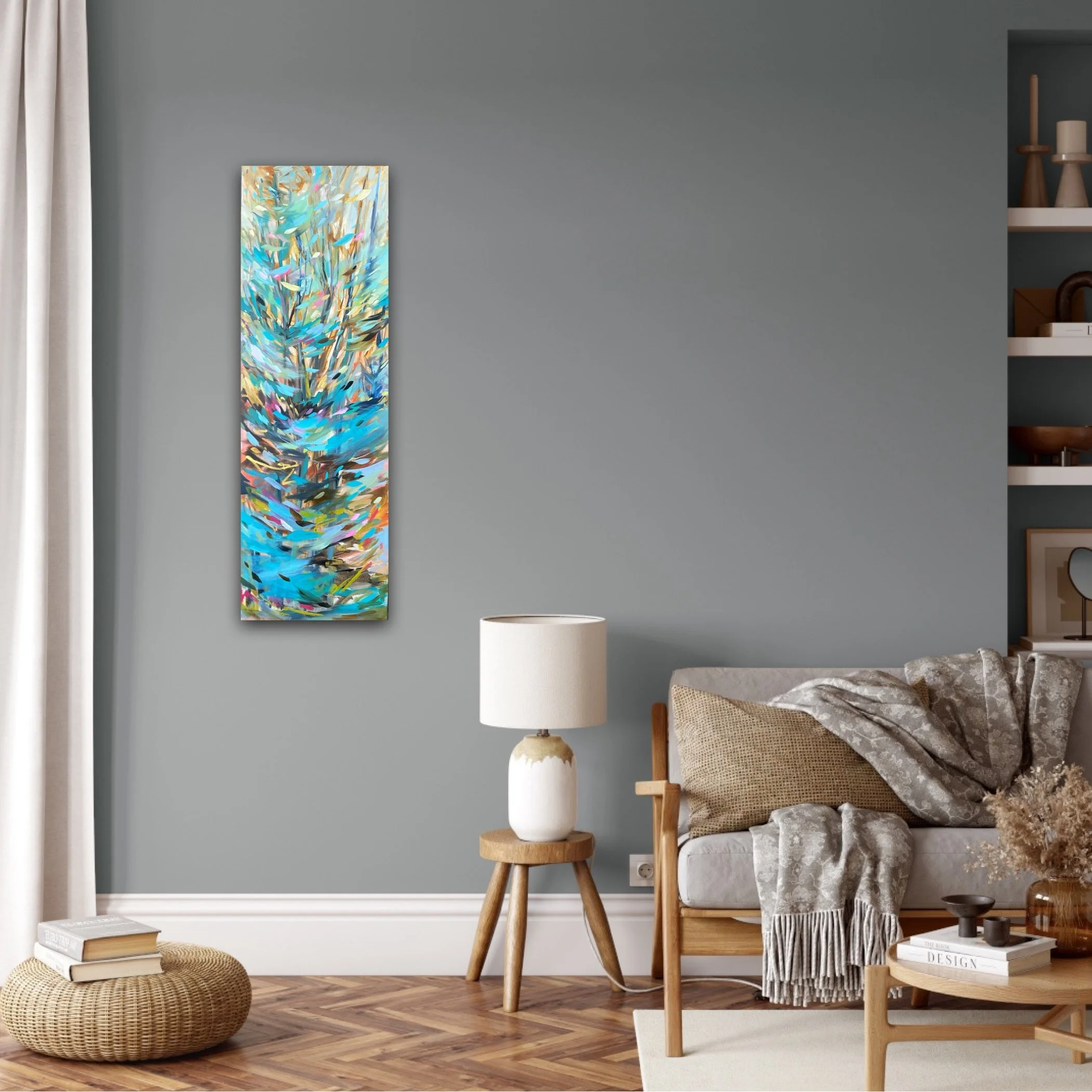






40 × 30 inches